
Digital Twin as an Exploratory Tool.
This project was developed for sixNfive and focused on the creation of a Digital Twin of the original house designed by architect Javier Barba.

The house was recently acquired (2025) by Ezequiel Pini, who is currently restoring the property and redesigning its interior. From this new stage, our work at secondarybounce aimed to envision the house in a possible future state..

A Vision of the House in the Future
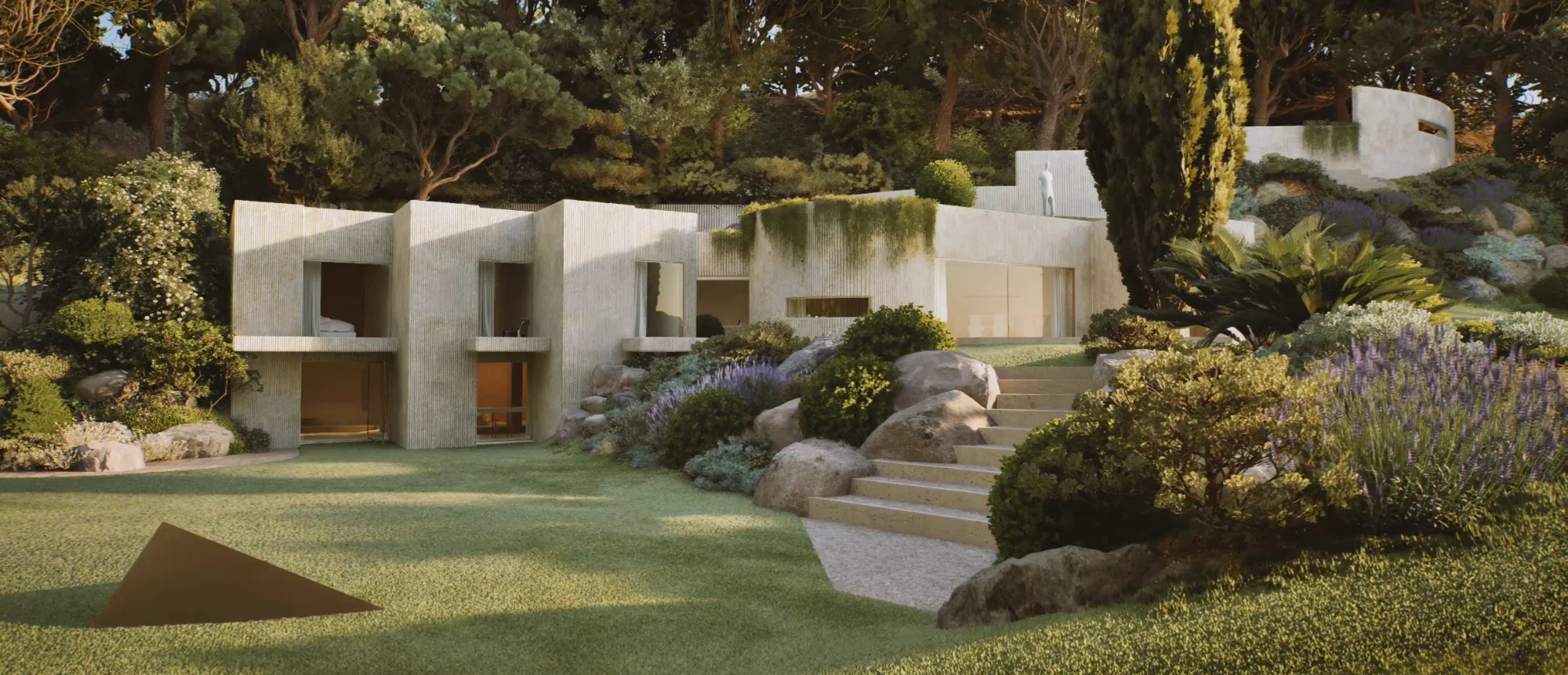
Rather than producing a strictly accurate representation of the current condition, the goal was to create a digital space that allowed us to explore architectural possibilities.
The project was conceived to be presented during an event held inside the house itself, where the digital experience functioned as a speculative layer over the physical space..


Interactive Experience
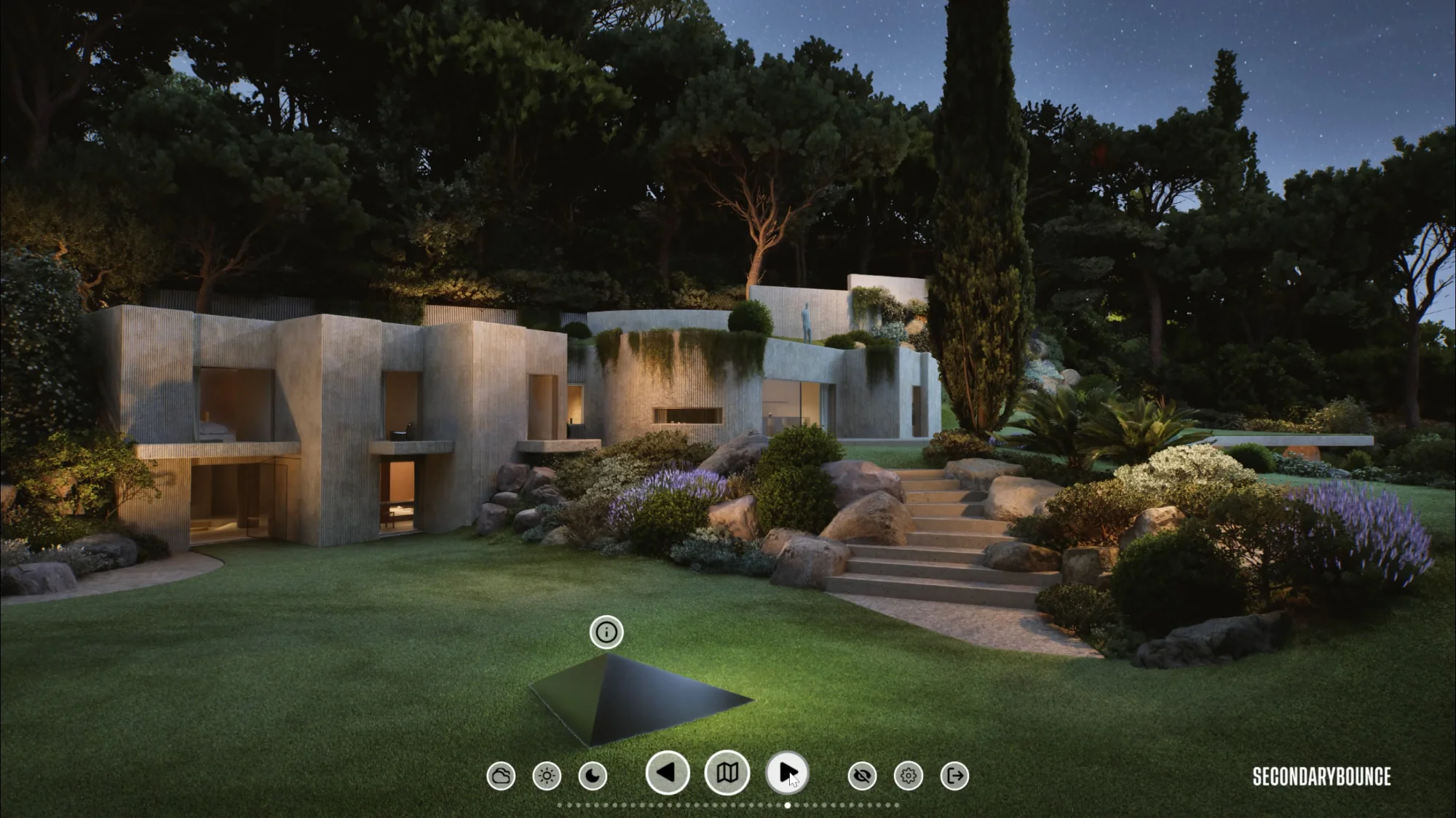


We developed an interactive application that allows users to navigate the house both in first-person and third-person perspectives.
This approach treats architecture not only as a static image, but as an experience that can be explored, inhabited, and perceived over time..


Garden, Interventions, and Possible Extensions
In addition to recreating the existing garden, we proposed partial redesigns, spatial interventions, and potential extensions.
These explorations were approached experimentally, using the digital environment as a space to test ideas and imagine how the house could evolve in the future.
An Open-Ended Process
None of the elements presented here are final. The value of this project lies in the process itself, in exploration, and in the use of real-time visualization as a tool for architectural thinking.
Above all, this project became a meaningful collaborative experience, where the digital twin served as a medium to speculate, discuss, and anticipate possible futures..


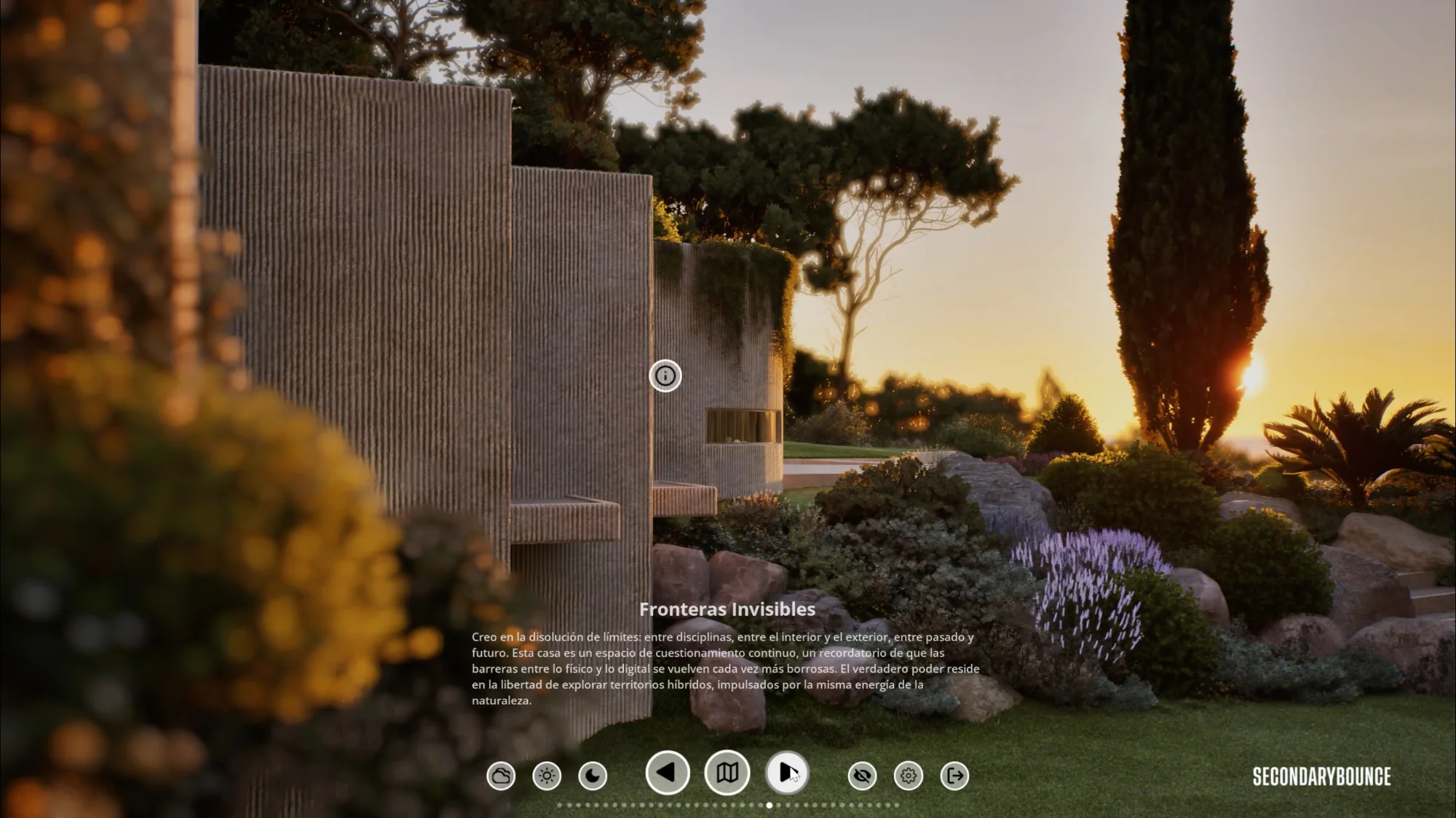

Secondary Bounce Visualization Tool
Developed by Secondary Bounce is a real-time,
interactive environment designed to explore architectural spaces beyond static representation.
Rather than focusing solely on final images, the tool allows projects to be experienced spatially, enabling movement, scale perception, and atmosphere to become part of the design process..


Navigation
The tool allows users to navigate spaces freely, switch between first-person and third-person views, presets cameras and explore the project at their own pace.
This interactivity transforms visualization into an active dialogue with the space, where decisions can be tested, questioned, and reimagined in real time..

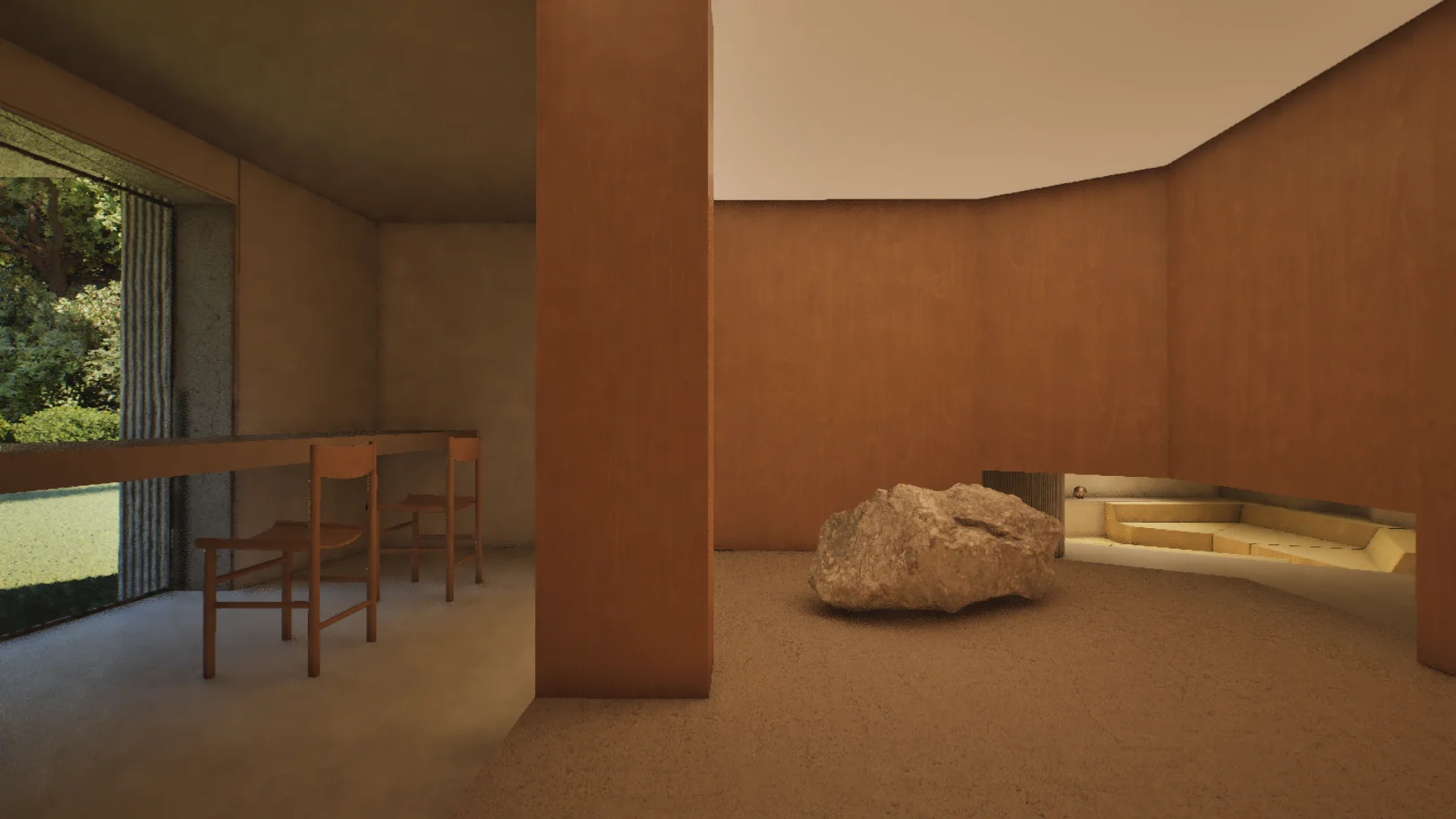
A Space for Exploration
The tool is conceived as a design laboratory. Materials, lighting, vegetation, spatial relationships, and architectural interventions can be changed as part of an open process rather than a closed outcome.
It enables speculative scenarios, future visions, and alternative configurations to coexist within the same digital environment..

From Representation to Experience
By combining architectural thinking with real-time visualization, the tool shifts the focus from representation to experience.
It becomes a medium to communicate ideas, provoke discussion, and anticipate how a space might feel, behave, and evolve over time..